

Early versions of Subaru’s EyeSight crash avoidance system prevented real-world crashes with cyclists traveling parallel to the road, a new study from the Insurance Institute for Highway Safety has shown.
However, they were only modestly successful in reducing crashes with bicyclists overall, researchers found.
Subaru recently rolled out changes to the system that could make it more effective at recognizing cyclists in the most common crash scenario.
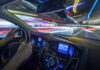
EyeSight is a suite of advanced driver assistance features that includes automatic emergency braking (AEB) and other technologies and is enabled by two cameras mounted behind the windshield. It was one of the earliest crash avoidance systems capable of preventing bicycle crashes, but the first two generations of the system were designed to detect only bicycles traveling in a parallel path to the vehicle.
The system reduced such parallel crashes by 29 percent but had only a minor impact on crashes with bicyclists overall, the IIHS study found.
“It’s promising that these early versions of EyeSight prevented crashes with bicycles traveling parallel to the road, but to have a meaningful impact, AEB systems also need to be able to prevent crashes with bicycles that are crossing in front of the vehicle,” said Jessica Cicchino, vice president of research at the Institute and the author of the study.
The third generation of EyeSight, which is designed to prevent both crossing and parallel crashes, is already available, though the IIHS said it was too soon for a study of its real-world effectiveness.