

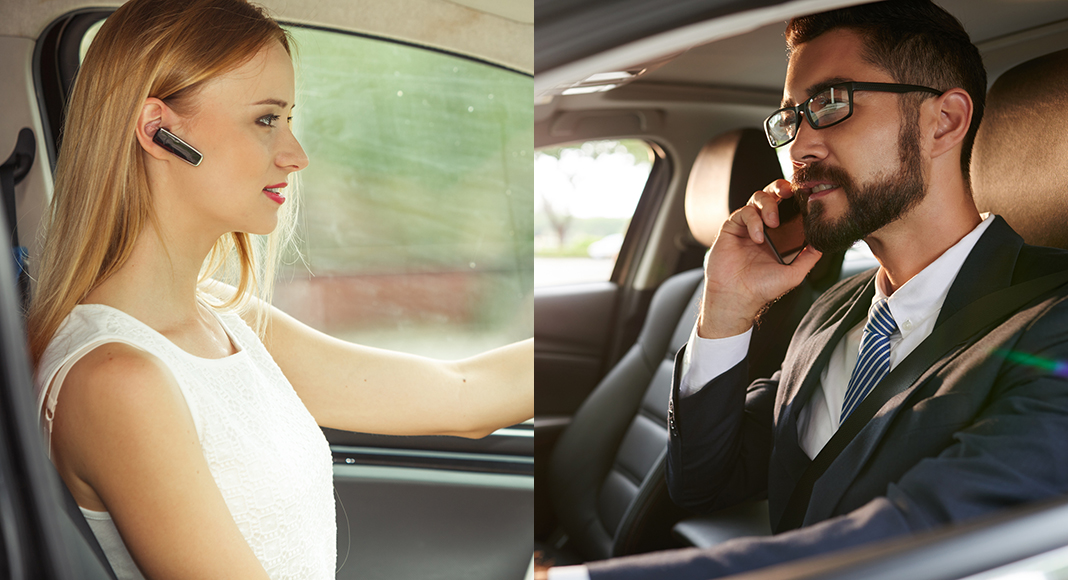
Hands-free phones allow drivers to keep their hands on the wheel and their eyes on the road so they must be safer, right? Wrong! It’s a common misconception that making a hands-free phone call while driving is safer than making a hand-held phone call. And it’s all because of the cognitive – or mental – distraction involved in a phone conversation.
Here are five myths dispelled about hands-free phone use versus hand-held phone use while driving.
1. Hands-free phone calls are safer than hand-held phone calls
In terms of level of distraction, using a hands-free phone is virtually no different to using a hand-held phone. That’s because it’s the brain that’s the problem, not the hands. Multiple research studies have shown that both hands-free and hand-held phone calls are a significant distraction while driving.
2. When I use a hands-free phone my driving ability is not impaired
Because it’s your brain that’s distracted, not your hands, any phone use while driving can impact on all kinds of mental tasks required to drive safely including scanning, concentration and decision making. It can also cause you to focus on a smaller area of the road ahead and fail to see hazards, even when you’re looking directly at them!
3. If hands-free phone calls are so distracting, this must mean that talking to passengers has the same effect
There are significant differences between having an in-car conversation and having a conversation with someone on a mobile phone. When you’re talking to a passenger, that passenger is aware of what is happening in the road environment around your vehicle and is likely to pause conversation when required. A caller on the other end of a phone has no idea what’s going on around you and will keep chatting regardless of the on-road decisions you are faced with!
4. I’m good at multitasking so can easily talk on hands-free while driving
Research shows that people don’t multitask, they task switch. This task switching can occur so rapidly it feels like you are multitasking, but you’re not. Every time you task switch, there is a small cost to re-engage with the new task and get back into the workflow of that task.
5. Making hands-free calls at work helps to avoid wasted time and build customer relations
The opposite is true here. An employee using just half their brain while having a phone conversation is not a productive employee. And a distracted conversation with a customer does not give a good impression; customers deserve your full attention. The best advice is to set up voicemail or automatic texts that let incoming callers know you’re driving and that you will call them back when it’s safe to do so, when you can give them your undivided attention.
Learn more: Watch eDriving’s Seven Stages of Distraction Denial on-demand webinar for more information on distracted driving including hands-free vs hand-held phone use, the impact on employee productivity and why in-car technology doesn’t always improve driver safety.