
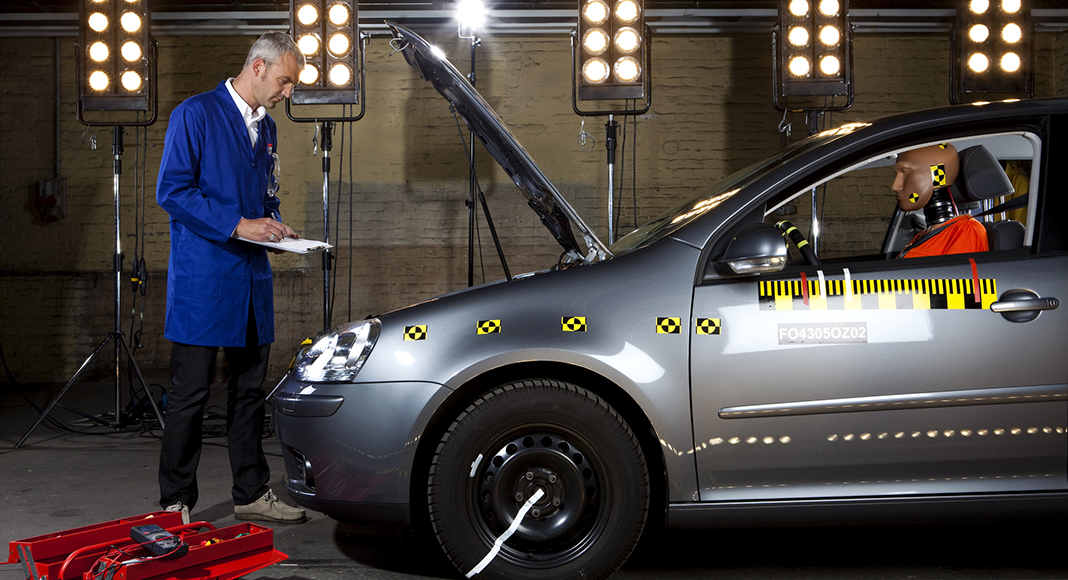
Vehicle improvements spurred by the Insurance Institute for Highway Safety’s (IIHS) testing program have saved nearly 50,000 lives since its launch in 1995, a new IIHS study has shown.
A recent head-to-head crash test held to mark the 30th anniversary of the IIHS crash testing program illustrates how dramatic the safety improvements have been.
The demonstration pitted a 1996 Chevrolet Blazer against the 2026 model in a special, head-to-head version of the Institute’s moderate overlap front crash test. It showed the driver of the new Blazer would likely have walked away with bumps and bruises. The driver of the 1996 model would have suffered serious, potentially fatal injuries.
IIHS also compared the real-world fatality rates for vehicles rated good with those rated acceptable, marginal or poor in each test. They then calculated the potential fatalities that would have occurred if the percentage of good-rated vehicles had not risen.
The results showed that vehicle improvements made in response to these tests saved an estimated 48,352 lives from 1999 to 2024.
“These results highlight the role of IIHS ratings in driving many of the key vehicle safety improvements of the past 30 years,” said Joe Nolan, IIHS chief operating officer.
“Our ratings program, in turn, has only been possible because of the unwavering support of our member companies in funding our work.”